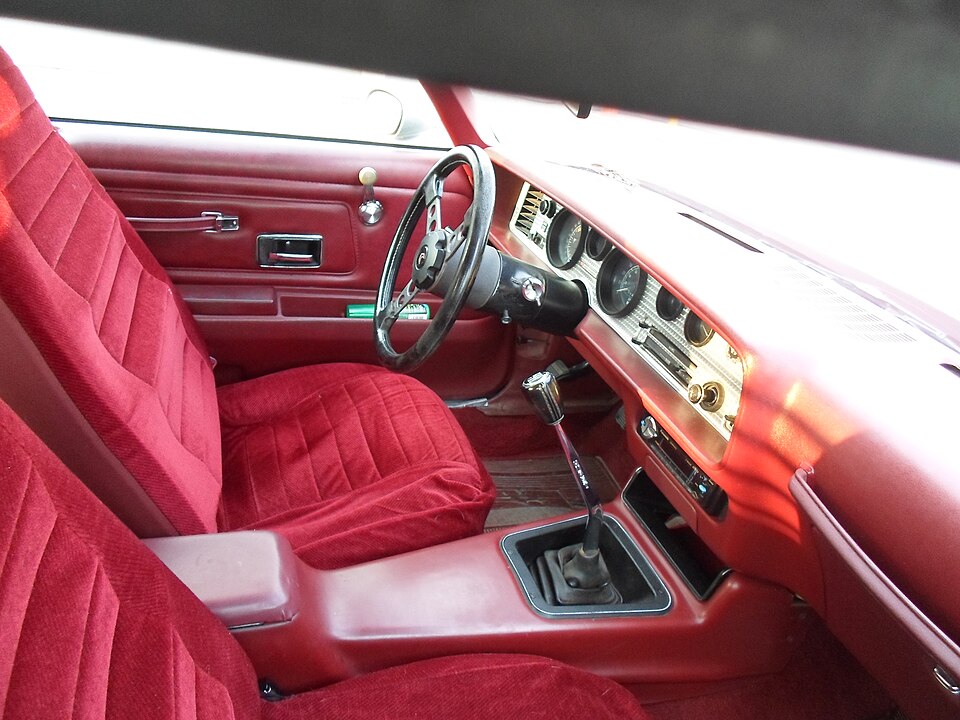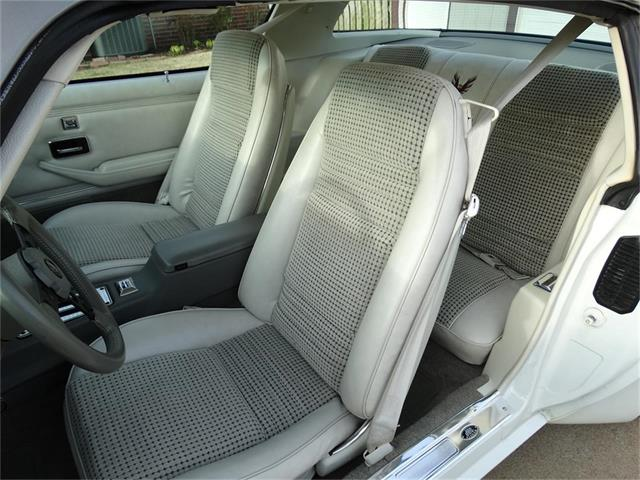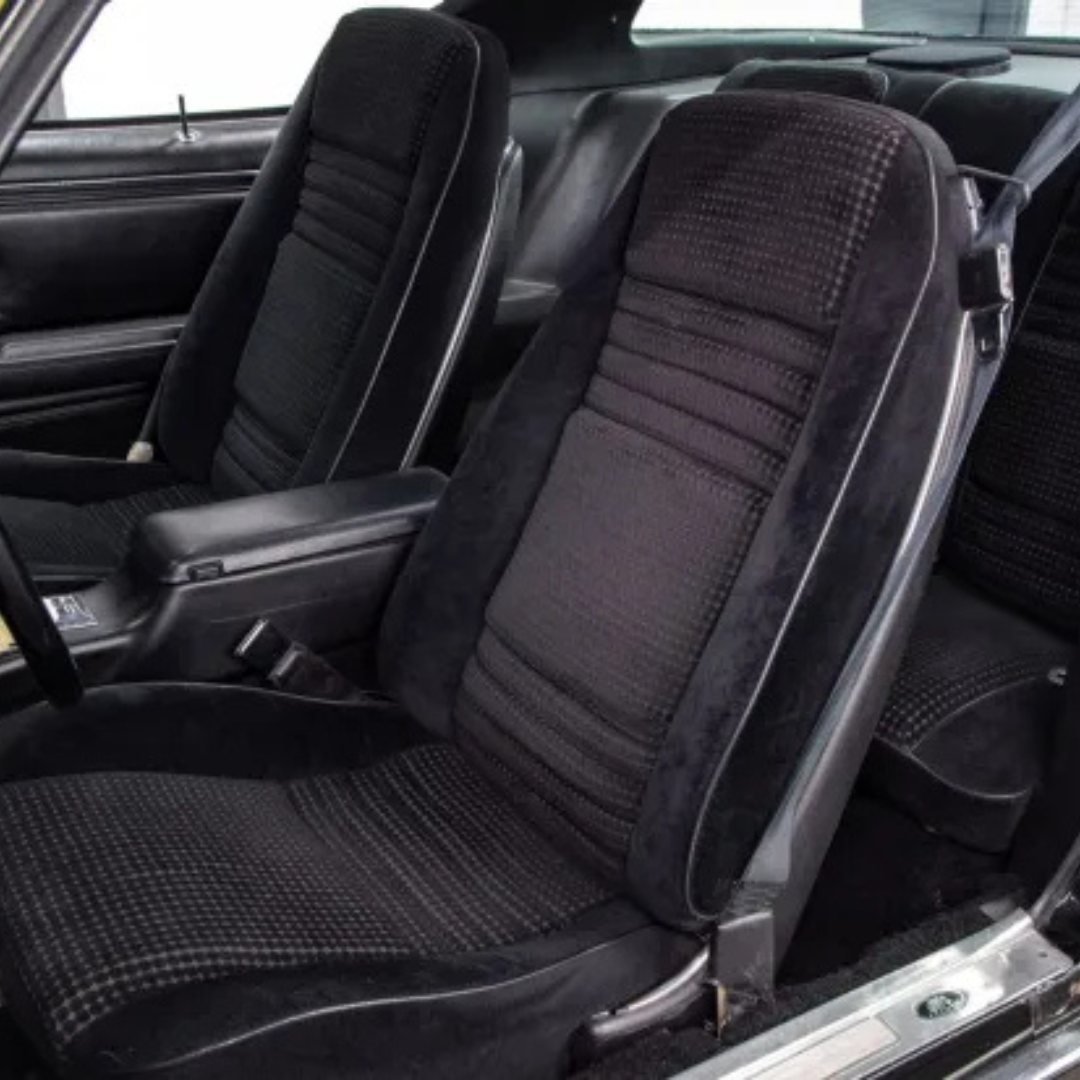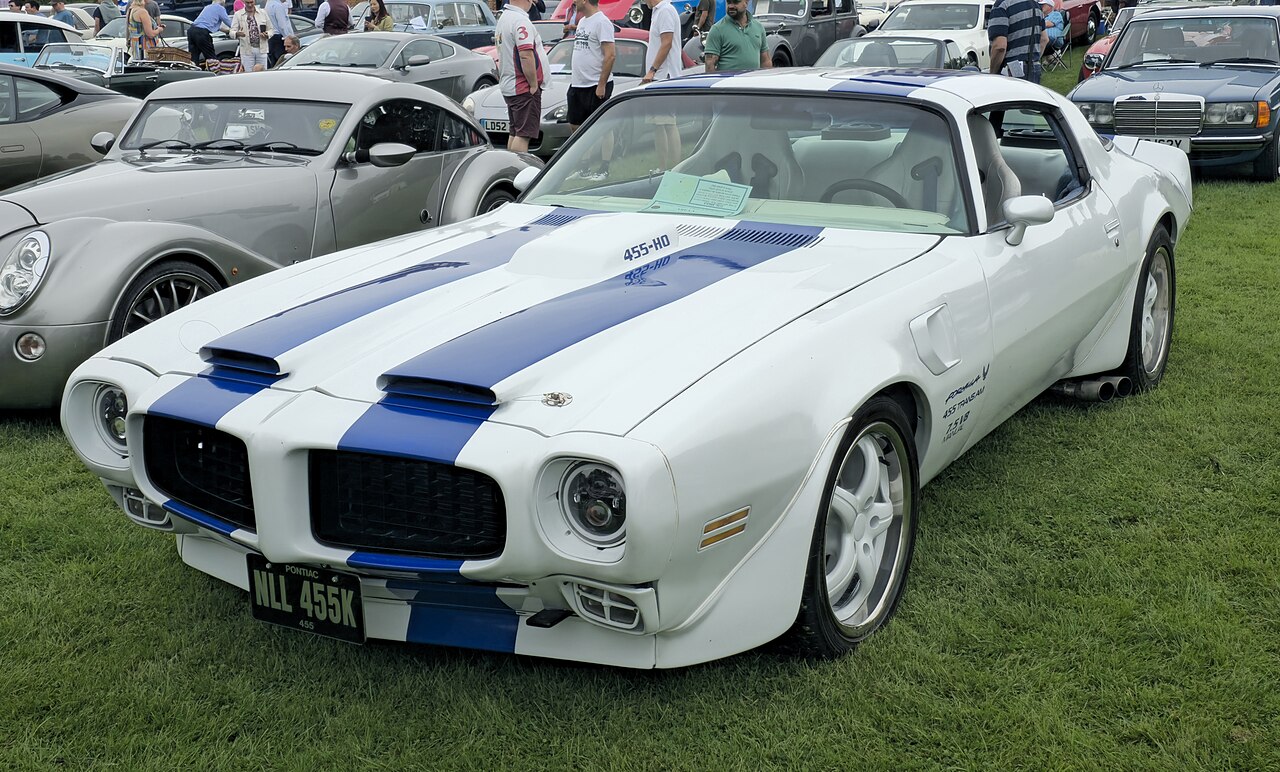
The 1979 1980 Trans Am hobnail cloth seats sit at an interesting intersection of practicality and period style. When Pontiac offered this upholstery option, it gave buyers something other than all-vinyl: a textured, breathable cloth center insert that looked different, felt different in summer heat, and has since become one of the more difficult details to get right in a concours-level restoration. If you are sorting out an interior and trying to understand what your car had, or what it should have had, this guide covers the factory specifics and the restoration realities.
What Hobnail Cloth Is and Where It Sits on the Seat
The term "hobnail cloth" describes a woven fabric with a regular grid of small, raised bumps. Run your hand across a surviving piece and the texture is immediately obvious. The name comes from the pattern's resemblance to the nail heads on a hobnailed boot sole. On Trans Am seats, this fabric did not cover the entire seat surface. It appeared as the center insert panel, covering the main seating surface of the cushion and the corresponding section of the seat back, while the surrounding bolsters, side wings, and headrest caps remained in matching vinyl. That vinyl-and-cloth split is factory correct. A seat re-covered entirely in hobnail cloth throughout the bolsters and all would not be accurate.
The fabric itself has a firm, close weave with the bumps woven in rather than pressed or glued onto a flat backing. Over time, the raised nubs flatten in areas of highest contact, typically the center of the driver's seat cushion and the upper center of the seat back. Once that texture compresses it does not spring back. The cloth can also develop a slight sheen in high-wear zones where body oils and friction have polished the surface. Color drift between the cloth insert and the adjoining vinyl is one of the clearest visual cues that a car's upholstery needs attention, and it is almost universal on unrestored survivors at this point.
Enthusiasts sometimes use "hobnail cloth" and "waffle cloth" interchangeably for this fabric. Both terms describe the same basic texture: a grid of small, regular raised bumps. If you see either label in a parts catalog, confirm by requesting a physical sample before committing to a full set.
Factory Availability for 1979 and 1980
The seat structure in question is the Deluxe Bucket, which was standard Trans Am equipment from 1978 through 1981. The Deluxe Bucket itself was not an upgrade option; it came on every Trans Am in those years. What varied was the upholstery covering. Standard from the factory was all-vinyl. Buyers who wanted cloth inserts selected that as a separate option, and the hobnail pattern is what Pontiac supplied for these years.
For 1979, interior colors available with the hobnail cloth option included Camel, a medium tan-beige, and Carmine, a deep red. These two are the most consistently documented through surviving cars and factory records. If you are researching your specific car's original specification, the interior trim code on the trim tag or broadcast sheet will confirm both the color and whether cloth was ordered.
Two 1979 specialty configurations are easy to conflate with standard interior builds. The Y89 10th Anniversary Trans Am came with silver leather-trimmed seats as part of its Platinum Silver Metallic package. It is the only second-generation Trans Am to leave the factory with leather upholstery, and it did not receive the hobnail cloth option. The Y84 Special Edition, the black and gold Bandit package, had its own specified interior combination and is likewise a separate configuration from the standard cloth-optioned car. If you are restoring one of those cars, the interior research path is different from the one described here.
The 1980 model year continued the Deluxe Bucket in the same basic form, and cloth inserts remained in the option mix. Interior color availability largely carried over, though buyers should confirm their specific 1980 color against documented factory records rather than assuming 1979 and 1980 are interchangeable at the detail level.
Because cloth was an option and not a universal choice, two cars from the same year, same exterior color, and same trim level can look completely different inside. This matters when using another car as a reference during a restoration.
How the Cloth Ages and What to Look For
Forty-plus years of use, ultraviolet exposure, and variable storage conditions affect the hobnail cloth in predictable ways. Nub flattening appears first in the highest-contact zones. Color fading is usually uneven, with seat centers fading faster than bolsters or door panels, leaving the car with mismatched tones across the interior. Fraying along the seams where cloth meets vinyl is common; the transition between these two different materials is a mechanical stress point, and original stitching pulls free when the underlying foam softens.
If the foam has also deteriorated, and at this age it almost always has, sitting in the seat produces a collapsed, hammocked feel where the cushion no longer provides full support across its surface.
When evaluating a project car or checking your own seats, look for flattened or pilled nubs in the sitting zone, visible color difference between the cloth insert and the vinyl bolster, fraying or loose stitching at the cloth-to-vinyl seam line, foam collapse where the seat sits lower than the side bolsters, and evidence of a previous re-cover job that used incorrect fabric or repositioned seams.
Restoring the Seats: Getting Correct Results
A correct restoration means matching three things: color, texture scale, and seam placement. Getting one wrong compromises all three visually.
Color is the most obvious variable. Camel and Carmine are distinct shades with their own undertones, and neither photographs accurately under most lighting conditions. If intact original material survives anywhere in your car, a rear seat section or a portion tucked under a bolster, that is your physical reference. Match to that, not to a photograph.
Texture scale is the detail where many replacement fabrics fail. The hobnail bumps need to be close to the original grid spacing. Too large and the seat looks aftermarket immediately. Too small and the visual weight of the pattern disappears against the vinyl. Request a physical sample from any supplier before ordering a full set of covers.
Seam placement follows the factory pattern. The insert panel boundaries and the seams at the headrest are stitched at specific locations. A pattern traced from the original damaged covers, or an accurate reproduction pattern, is the most reliable guide.
Eckler's is a second option worth checking, particularly if Classic Industries shows your color as out of stock.
Verifying Your Car's Original Specification
Before ordering anything, confirm what your car actually left the factory with. The two primary documents are the broadcast sheet, sometimes called the assembly sheet, which was tucked into the car during production and occasionally survives under carpet or behind door panels, and the trim tag attached to the firewall or door jamb area.
The trim tag carries the interior color code. Cross-referencing that code against documented option breakdowns for 1979 or 1980 will confirm the correct color. Whether the car had cloth or vinyl is indicated by a separate option code on the broadcast sheet. The Pontiac-Oakland Club International maintains documentation resources and can assist members in decoding build records, and the club's marque expertise is useful when a trim tag alone raises more questions than it answers.
If the broadcast sheet is gone and the trim tag is ambiguous, the rear seat is often the most undisturbed reference point. Rear passengers in a second-gen Trans Am were a relative rarity, so rear seat upholstery frequently survives in better condition than the fronts and gives you a direct physical look at the original material.