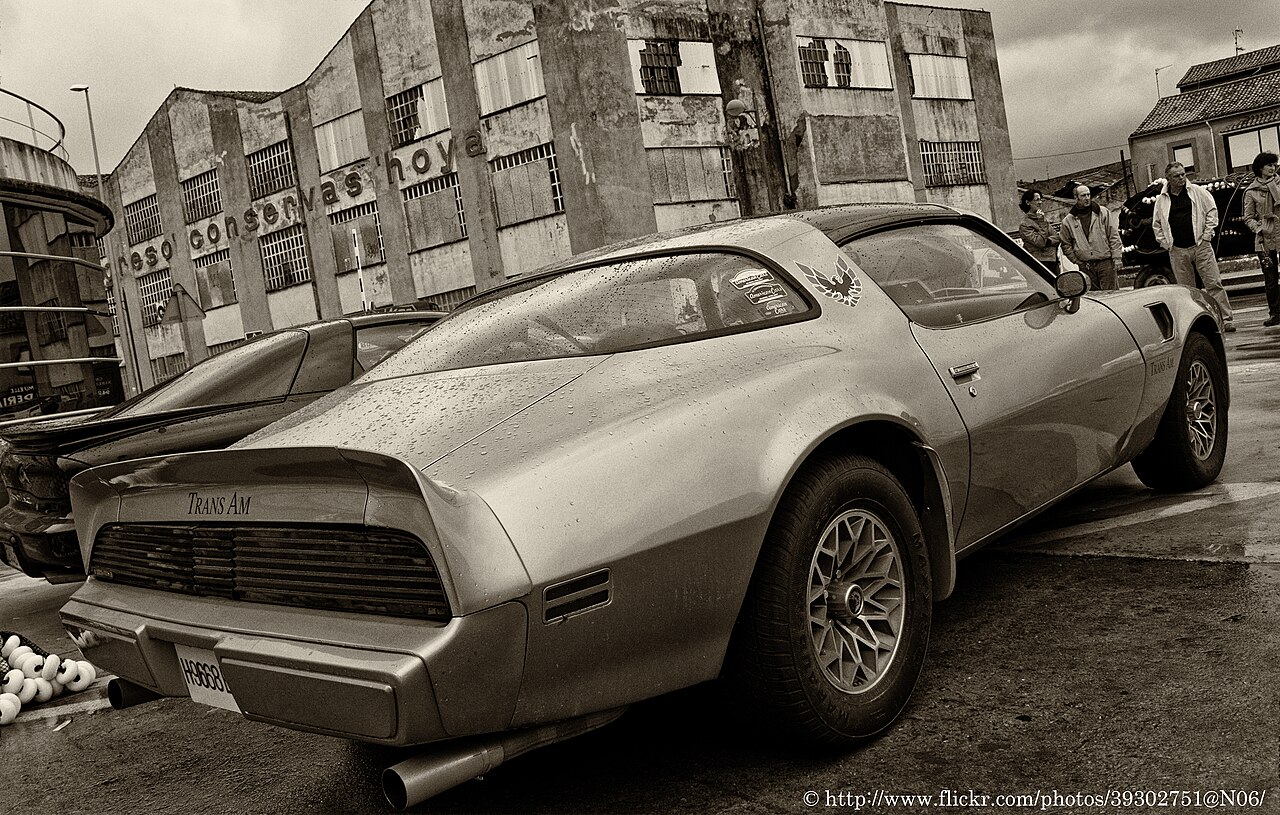
What engines were available in a 1979 Trans Am? Three, though two of them account for nearly every car built, and the difference between those two shapes how the whole car drives and what it is worth today. Buyers chase one of them and treat the other as the sensible daily option. Knowing which is which is the single most useful thing you can learn about this year of car, so this guide lays out both engines, their ratings, and how to tell what a given car actually left the factory with.
The Pontiac 400 W72
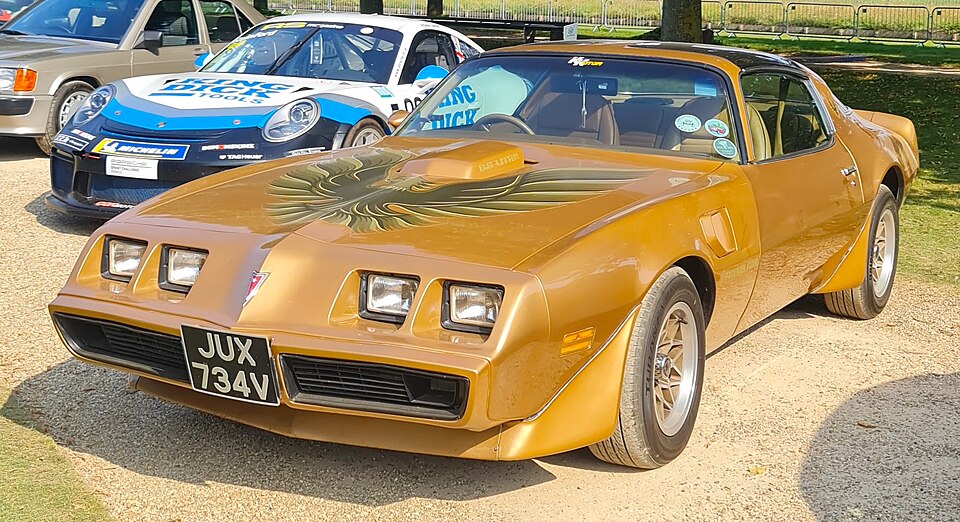
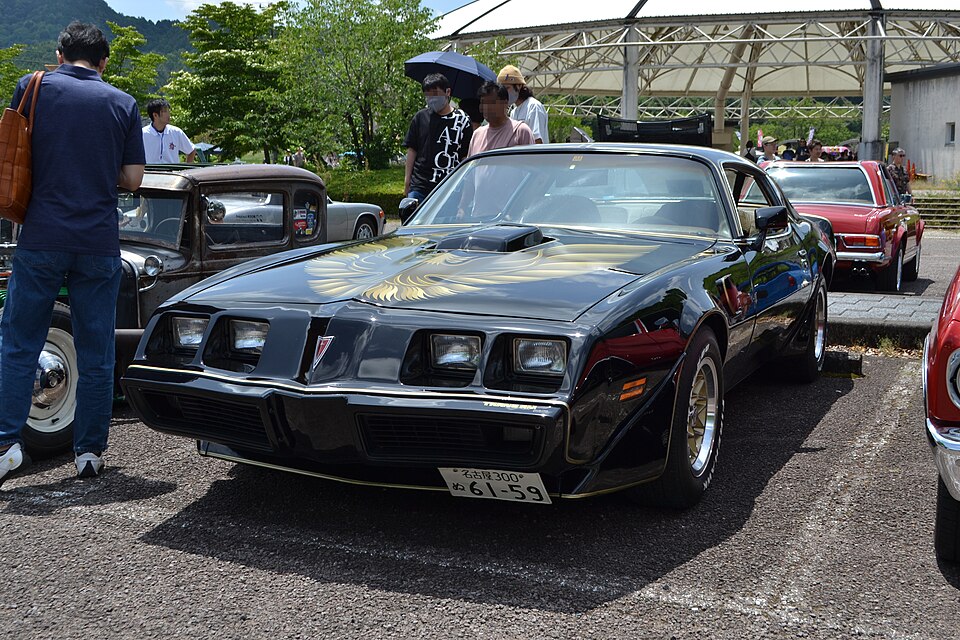
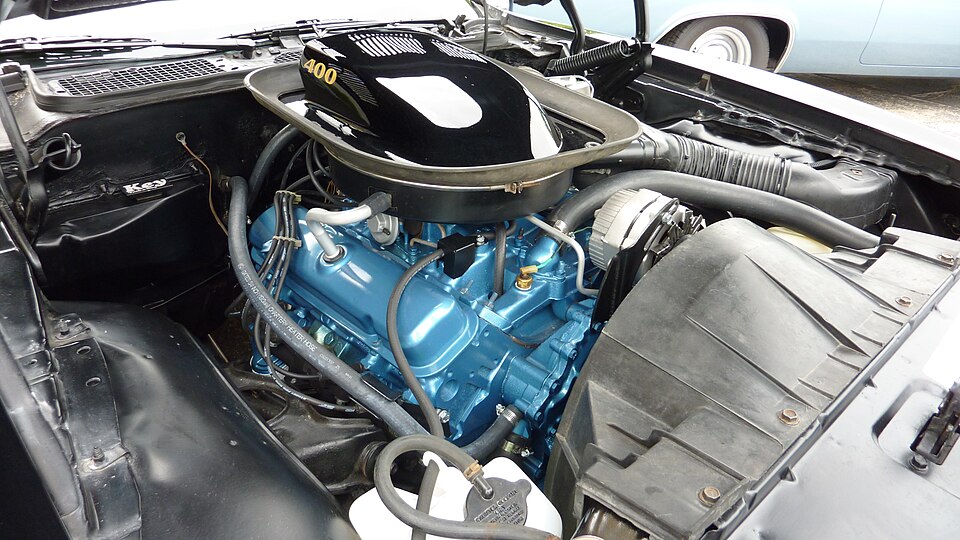
The engine collectors want is the Pontiac 400 cubic inch V8 fitted with the W72 performance package, the step up from the standard 403. In 1979 it was rated at 220 horsepower, and it was the only engine you could pair with the Borg-Warner four-speed manual. The shaker hood scoop wore a T/A 6.6 call-out on cars so equipped. The 6.6 LITRE decal belongs to the Oldsmobile 403. This is the combination that defines the 1979 Trans Am for enthusiasts, partly because of how it drives and partly because 1979 was the last year the Pontiac 400 appeared in the car.
By 1979 Pontiac was working through the last of its 400 blocks, which is why the W72 four-speed cars are comparatively scarce and why they carry a premium. If originality matters to you, confirm the engine rather than trusting the hood decal, which can be added to any car. The black-and-gold look most buyers associate with the Bandit belongs to the Smokey and the Bandit film cars, which were specially built 1977 Trans Ams, not 1979 W72 cars, even though both wear the same shaker scoop and hood bird styling.
The Oldsmobile 403
The standard engine was the 403 cubic inch V8, built by Oldsmobile, rated at 185 horsepower. It was backed by an automatic transmission only. There was no four-speed 403. The 403 was a torquey, easygoing engine that suited the automatic and made a comfortable cruiser, and it was the required engine in California and in high-altitude regions, where the Pontiac 400 was not certified for sale that year.
None of that makes the 403 a lesser car to own. It is a genuine factory engine and a correct 403 automatic is a usable, enjoyable Trans Am. It simply sits below the W72 400 four-speed in the collector market.
The Third Engine: The Pontiac 301
There was a third option. Pontiac offered a 301 cubic inch V8 (L37) as a credit option that lowered the price of the car. It was the smallest, least powerful engine you could put in a 1979 Trans Am, rated at 150 horsepower. Pontiac built 14,009 of them, 3,333 with a manual and 10,676 with an automatic, which is more than the 8,326 cars that got the 400. Cars so equipped are genuine and correctly documented, but the 301 sits below both the 400 and the 403 with collectors. Hagerty values a #3 Good 301 car at $21,600, against $24,900 for a 403 and $26,600 for a 400. At #1 Concours the gap grows to $71,900 for a 400, $61,200 for a 403 and $56,400 for a 301.
Worth clearing up, because it gets stated backwards often: the 301 was not the emissions engine. The 403 filled that role. California cars got the 403 because the Pontiac 400 was not certified for sale in the state that year.
The Four-Speed Rule
The quickest way to keep the main two straight is the transmission. If a 1979 Trans Am has a four-speed manual, it left the factory as a Pontiac 400 W72 car. If it has an automatic, it left the factory with the 403 or the 301. An automatic car with a 400 has had its engine or transmission changed. This is why the drivetrain, not just the badge, is central to what a 1979 Trans Am is worth.
How to Verify the Engine
Do not rely on the shaker decal or the seller's description. Check the engine block casting numbers and the partial VIN stamped on the block, and compare them against the car's VIN and the documentation. A build sheet or Pontiac Historic Services report confirms what the car was born with. On a model where the engine can swing the value by a wide margin, this verification is worth the effort every time.
Verifying the drivetrain is one piece of getting a 1979 Trans Am right. If the interior needs work too, our guide to buying 1978-1981 Trans Am seat covers covers what to check before you order a set.