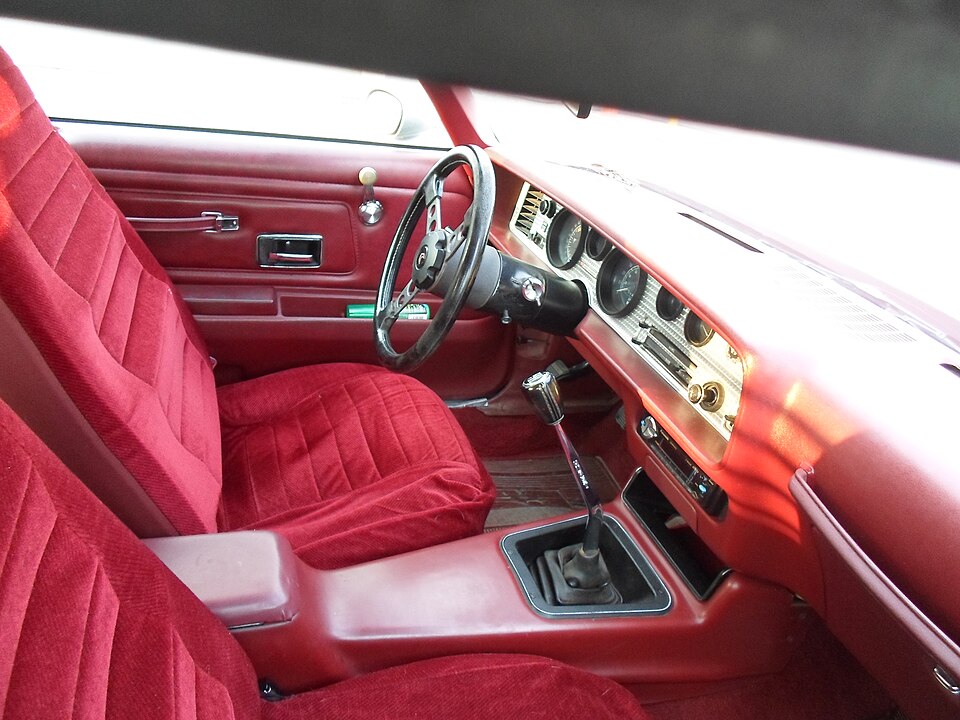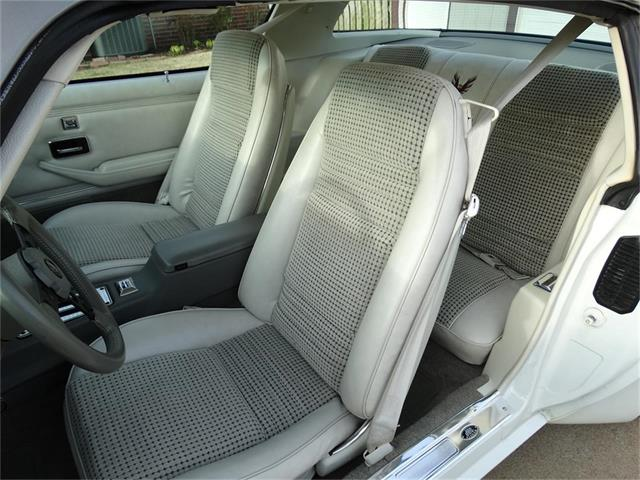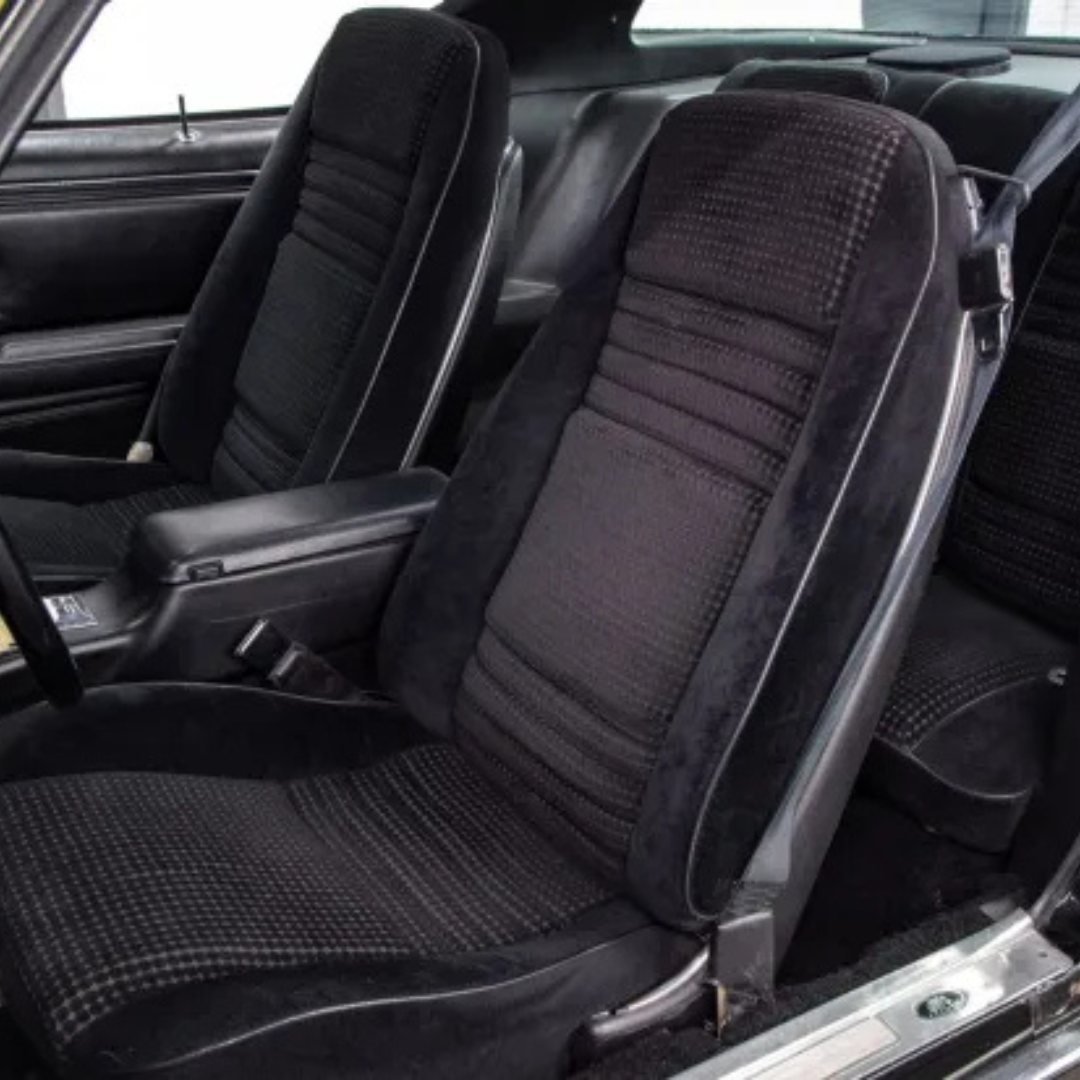
Picking the right Pontiac Firebird seat cover for a second-generation car (1970-1981) requires more than pulling up the first listing that appears on a parts site. The seat design changed meaningfully at least twice across this twelve-year production run, factory interiors were vinyl throughout with one very specific exception, and a cover built for the wrong sub-year will pull, gap, and look wrong within weeks. This guide covers what left the factory, what to verify before you order, and how to approach the installation without shortcuts.
Factory Seat Specifications Across the Second Generation
The second-generation Firebird and Trans Am went through three identifiable seat phases before production ended in 1981. Covers are not interchangeable between these phases.
1970-1973: The early cars carried an upright bucket seat with an integrated headrest that was part of the backrest structure. Interior color availability was broad during this period, with choices including Black, Sandalwood, Blue, and others depending on the specific model year. All factory upholstery was vinyl.
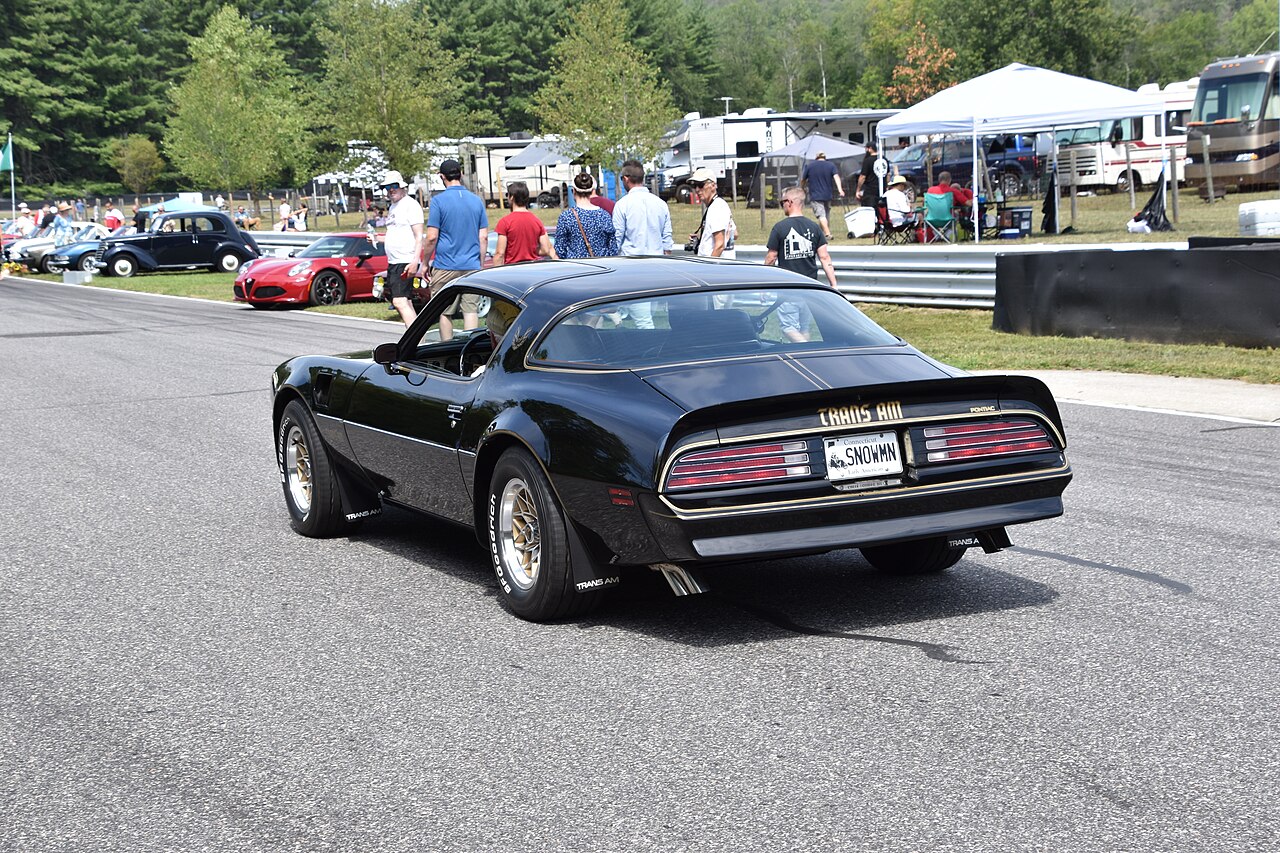
1974-1977: Pontiac revised the seat design mid-decade. The 1977 model year gets a lot of attention from collectors because of the Smokey and the Bandit connection. A clarification matters here: the cars used in that film were specially built vehicles, not standard production 1977 Trans Ams. Standard 1977 cars share a strong family resemblance but are not film cars. The Y84 Special Edition package, commonly called the Bandit package, paired a specific black exterior with a distinct interior combination. All of it was vinyl.
1978-1981: The front-end styling refresh in 1978 brought a redesigned interior along with it. The Deluxe Bucket seat became standard equipment on the Trans Am for this period, not an upgrade. It has a distinct profile compared to earlier units, and covers designed for a 1974-1977 car will not fit a 1978-1981 seat correctly. If you are sourcing covers for a late second-gen Trans Am, confirm the listing specifically addresses this seat.
The one and only second-generation car to leave the factory with leather upholstery was the 1979 10th Anniversary Trans Am, option code Y89. Those seats were silver leather-trimmed, matching the Platinum Silver Metallic exterior of the car. Every other second-gen Firebird and Trans Am, regardless of trim level, left the factory wearing vinyl.
Choosing the Right Pontiac Firebird Seat Cover for Your Year
Before placing any order, pull the trim tag from your car. On second-generation Firebirds, this tag is typically found on the driver-side door jamb. It contains a two-digit interior color code that tells you exactly what color and material combination your car carried from the factory. That code is your authority, not a catalog photo, not a seller's description.
Once you have the code, cross-reference it against the specific seat design for your year and model. A 1975 Firebird Formula and a 1980 Trans Am are both second-gen cars, but they take completely different seat covers. Some suppliers organize their listings well by sub-year and seat type. Others lump the full second-gen range together and leave the buyer to work out the fitment detail.
Color range across the second-gen years included Black, Buckskin, Red, White, Blue, and Camel at various points in the production run, though availability varied by year and model. If you are targeting a factory-correct restoration, the trim tag is the only reliable starting point.
Material, Fit, and What to Check Before You Order
Factory Firebird seat covers were cut and sewn to fit a specific foam bun and seat frame. When you pull old covers off a car that has been sitting for three or four decades, the foam underneath is often crumbled, compressed unevenly, or cracked through. New covers over compromised foam will look lumpy, shift during use, and wear out faster than they should. Inspect the foam before anything else goes back on the frame.
The covers attach to the seat frame with hog rings, not adhesive or staples. You need hog ring pliers and a supply of rings to do this correctly. Substituting zip ties or other fasteners produces covers that creep and look unprofessional on close inspection.
Fit also depends on whether your seats have been reupholstered before. Previous work may have altered the foam profile, which can cause a correctly specified cover to pull at the seams. If this is a restoration from bare metal and original foam, results will be more predictable.
Check what the listing actually includes. Some sets cover both front buckets and the rear bench. Others sell fronts only. The second-gen rear seat is a bench unit, and a matching interior requires getting the rear pieces right as well.
Installation: What the Job Actually Involves
Pulling a seat from a second-gen Firebird is not complicated. Four bolts at the tracks, disconnect the seatbelt if it routes through the seat, and the unit comes out. Working on the seat at a bench is far easier than trying to fit covers with the seat still in the car.
Disassembly sequence matters. Remove the seatback cover before the cushion cover. Take photos at every stage so you have a reference for how everything attaches before you begin reassembly.
With the covers and foam off, clean the seat frame. Surface rust on the frame is common on cars of this age and worth treating before anything new goes back on. A wire brush and a coat of rust-inhibiting paint takes less than an hour and protects your new upholstery investment.
If you are replacing the foam, fit it to the frame and confirm the shape before you start hog-ringing the cover in place. Once you begin fastening the cover down, making adjustments gets progressively harder.
The 1979 10th Anniversary Trans Am and Its Leather Seats
The 1979 10th Anniversary Trans Am is the outlier in an otherwise all-vinyl story and deserves specific attention. Built to mark ten years of Trans Am production, these cars wore Platinum Silver Metallic paint, silver leather-trimmed bucket seats, and anniversary-specific badging throughout. T-tops came as standard equipment on the package. The option code is Y89, and production for the 10th Anniversary package totaled approximately 7,500 units across coupe and T-top configurations.
If you are restoring a Y89 car, the seat covers must match the silver leather-trimmed original. Substituting correct-year vinyl covers on these seats will not reproduce the factory appearance, and anyone restoring a Y89 for judged shows will be marked down immediately. These covers are available from specialty suppliers but are typically more expensive and less widely stocked than standard vinyl units.
For every other second-gen Firebird and Trans Am, leather seat covers are an upgrade, not a restoration part. If a listing describes them as factory-correct for any second-gen car other than the Y89, that claim is wrong.