The 1979 Trans Am paint colors spanned a broad factory palette and two special-package color schemes that have since become the most recognized combinations in second-generation Trans Am history. Whether you are restoring a base car to factory spec or verifying the authenticity of a Y84 or Y89, knowing exactly what Pontiac offered in 1979 is the starting point for every decision that follows.
The Standard 1979 Trans Am Color Palette
Pontiac offered the following exterior colors for the 1979 Trans Am. Each color's code appears on the Body by Fisher cowl tag, a metal plate spot-welded to the driver's side firewall. The two-digit paint code in the exterior color section of that tag identifies what color the car wore when it left Norwood or Van Nuys.
The confirmed colors for 1979 include:
- Cameo White. A clean, bright white that paired well with gold, blue, or black accent graphics. One of the higher-volume production colors.
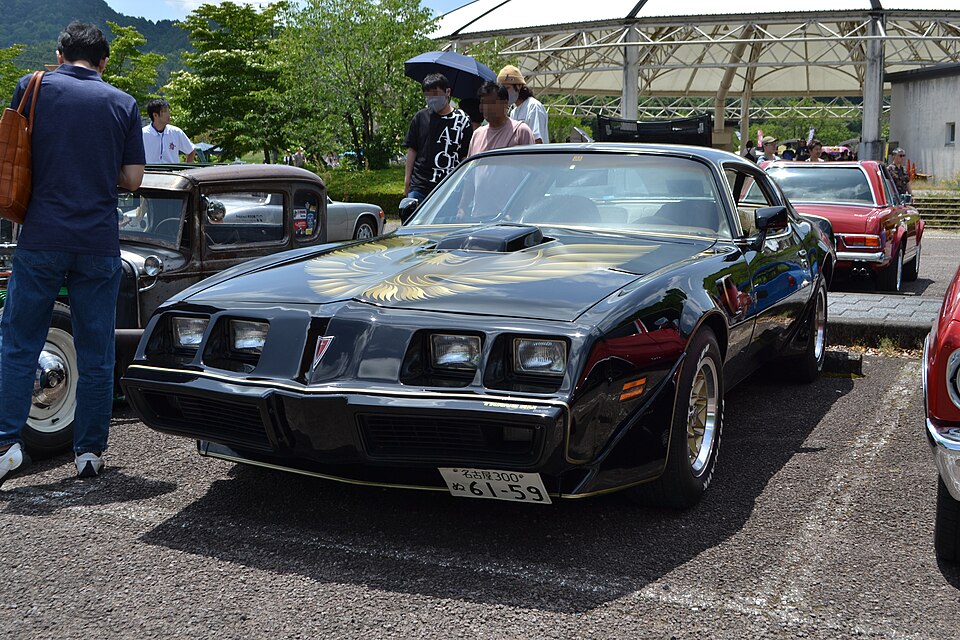
- Starlight Black. The darkest option and the required foundation for the Y84 Special Edition package.
- Platinum Silver Metallic. A cool silver that anchored the Y89 10th Anniversary package.
- Martinique Blue Metallic. A medium blue metallic, one of the more understated choices in the lineup.
- Lombard Orange. A vibrant red-orange offered to buyers who wanted maximum visibility. Relatively few cars left the factory in this color.
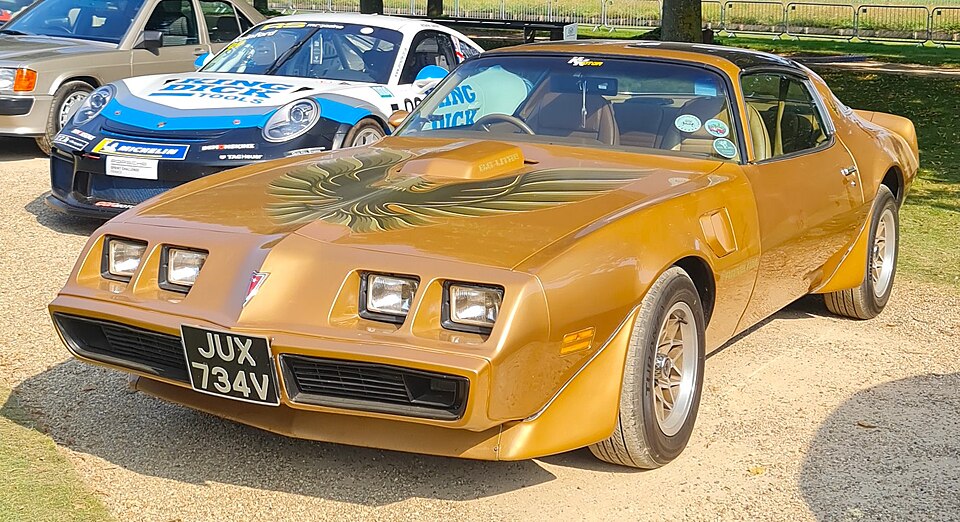
- Solar Gold. A warm gold metallic, distinct in tone from the flat gold applied to the Y84 graphics.
- Sundance Yellow. A saturated yellow that read very aggressively against the standard black hood bird.
- Palomino. A light tan that was popular when paired with camel interior trim.
Not every color sold in equal numbers. Starlight Black and Cameo White accounted for a large share of total production. Colors like Lombard Orange and Palomino were ordered far less often, which makes finding one today in confirmed original condition more difficult.
If your cowl tag shows a code that does not match anything on this list, check the full Pontiac body and paint documentation for 1979. The Pontiac-Oakland Club International maintains technical resources and a member registry that can help verify unusual combinations or dealer-special-ordered cars.
Special Packages and Their Dedicated Colors
Two 1979 Trans Am option packages required a fixed exterior color. These were not simple paint choices layered onto an otherwise flexible build. Each package tied the color to graphics, interior trim, and badging in a way that was designed as a single coordinated specification.
Y84 Special Edition
The Y84 Special Edition required Starlight Black as the exterior. The package added gold hood bird graphics, gold pinstriping along the body, and gold honeycomb wheels. If a buyer wanted any other exterior color, they could not order the Y84. Black was a condition of the RPO, not a preference within it.
The Y84 is frequently called the Bandit package, a reference that has grown stronger with time. It is worth being specific here: the cars built for the Smokey and the Bandit film production were specially prepared 1977 Trans Ams, not 1979 production cars. A 1979 Y84 Trans Am shares a visual language with those film vehicles, but it is a factory production car built on the standard assembly line. The two should not be conflated.
Y89 10th Anniversary Trans Am
The Y89 package marked the Trans Am's tenth year of production, counting from the model's debut in 1969. The exterior was Platinum Silver Metallic, combined with silver-toned hood and body graphics that were unique to the package.
The interior was trimmed in silver, and this is the one second-generation Trans Am that left the factory with leather-trimmed seats. Every other 1979 Trans Am, and every other Trans Am from the entire 1970-1981 second-generation run, came with vinyl seating. The Y89's leather seats are not an option that appeared elsewhere in the lineup. Pontiac built approximately 7,500 Y89 units, and they carried a meaningful price premium over a standard Trans Am at the time.
How to Read Your 1979 Trans Am Cowl Tag
The Body by Fisher tag on a 1979 Trans Am is riveted to the firewall on the driver's side and is visible when the hood is open. It contains several fields that document how the car was built at the factory:
- Body style code
- Paint code (two-digit number)
- Interior trim code
- Build date
- Additional option codes
The paint code is listed in the section labeled for exterior or paint. Cross-referencing that two-digit number against Pontiac's published color chips confirms the original color. If the cowl tag has been painted over or is otherwise damaged, a body specialist familiar with Fisher documentation can sometimes read it under the surface using appropriate lighting or chemical reversal. As a last resort, Pontiac Historical Services offers documentation lookup by VIN, which typically includes original build specifications.
Color chip books produced for Pontiac dealerships are reproduced in several aftermarket reference publications. Having one on hand during a restoration is practical, because colors like Solar Gold and Sundance Yellow can look similar in photographs but are clearly different against a proper chip.
Graphics, Stripes, and the Colors Within the Color
One factor that complicates discussions of 1979 Trans Am paint is that Pontiac offered additional striping and graphic packages that introduced secondary colors. The large screaming chicken hood decal was standard Trans Am equipment. In 1979, it was available in color variants that included gold, black, and a blue-silver shade, depending on the exterior paint and the options ordered.
A Cameo White Trans Am with a gold bird reads very differently from the same car with a blue-silver bird, even though both start with the same body color. The stripe colors running across the doors and lower body panels also varied by package. Ordering the correct stripe and decal combination for a restoration requires the full option code string from the cowl tag, not just the exterior paint code by itself.
Interior Colors and How They Relate to Exterior Paint
Pontiac offered the 1979 Trans Am with interior trim in a limited set of colors, and not every exterior paint was available with every interior option. The primary interior choices for the standard Trans Am in 1979 were black and camel vinyl, with the specific combinations defined by the Pontiac trim selector published for that model year.
The 1978-1981 deluxe bucket was the standard Trans Am seat and came in the vinyl colors listed above. It was not an upgrade option. Every 1979 Trans Am without the Y89 package had vinyl seating from the factory, full stop.
If you are sourcing replacement seat covers, the interior trim code on the cowl tag identifies the correct vinyl color and pattern. Confirming that code before ordering parts avoids mismatches that are expensive to correct after the fact.