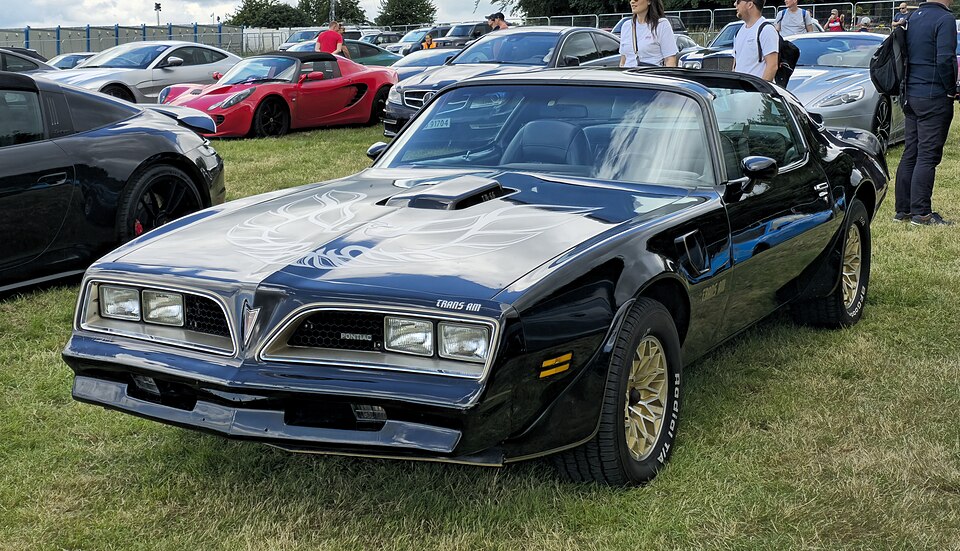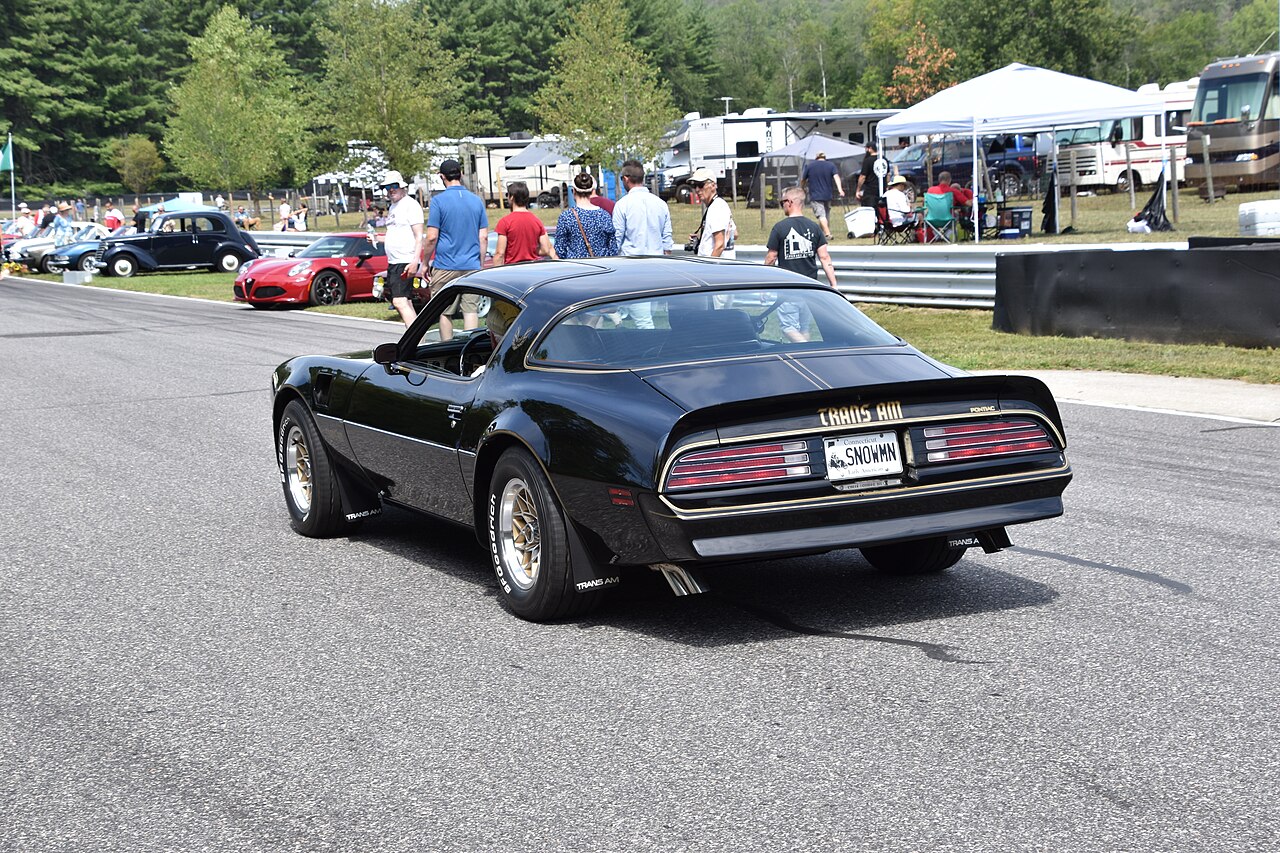
The question of how Smokey and the Bandit made Trans Am famous is not complicated, but the details behind it are worth getting right. The film opened in May 1977, placed a black-and-gold Pontiac at the center of every chase sequence that mattered, and introduced that car to an audience measured in the tens of millions. The Trans Ams used during production were specially built for the shoot, not standard cars pulled from a Pontiac dealership lot. Multiple vehicles were used across the production, and they were not all configured identically. Some were consumed by stunts. Understanding that distinction matters for anyone trying to reconcile the film cars with what Pontiac was actually selling in 1977.
The broader story, how a single movie reshaped the public profile of an American performance car, is one of the cleaner examples of popular culture driving automotive demand in the postwar era.
The Box Office Numbers and What They Did to Showroom Traffic
Before Smokey and the Bandit reached theaters, the Trans Am was a strong seller within the Firebird lineup but not a name every American driver recognized. Pontiac built approximately 68,745 Trans Ams for the 1977 model year. That figure climbed to roughly 93,341 for 1978 and continued upward to approximately 117,108 units in 1979. That is not an organic growth curve. It is the sales chart of a car whose public image changed almost overnight, and the timing aligns directly with the film's theatrical run and its subsequent presence on cable television and home video.
The film performed in ways that gave it outsized cultural reach. According to Box Office Mojo, Smokey and the Bandit grossed approximately $126.7 million domestically, ranking it as the second-highest-grossing film of 1977 behind Star Wars. A production that began with a reported budget of around $4.3 million generated domestic receipts of approximately $126.7 million. The people who bought those tickets, and who later caught the film on television, saw a black-and-gold Pontiac presented as the most desirable vehicle on an American road. They could walk into a Pontiac showroom and buy one. That accessibility was a significant part of the formula.
Director Hal Needham had built his career as a Hollywood stuntman before transitioning to directing. He photographed a car moving fast better than most directors working at the time. The Trans Am received the kind of camera treatment that performance cars normally only get in magazine shoots, delivered inside a narrative that mainstream audiences connected with emotionally.
Why the Trans Am Was the Right Car for That Moment
The mid-1970s were not a banner era for American performance. Emissions regulations and insurance rate structures had eroded horsepower from most of what Detroit produced. The Trans Am had survived that contraction better than most competitors. The 400 cubic inch V8, badged as the T/A 6.6, was still in production and still delivered a driving experience that could justify the car's performance reputation. The car looked aggressive, sounded right, and was available at Pontiac dealerships across the country. The fantasy on screen was accessible in a way that an exotic car never could have been.
Burt Reynolds was the top-grossing male box office draw in America during this period. His presence in the film was not incidental to the Trans Am's cultural moment. The audience watching Reynolds navigate that black-and-gold car across the American South was seeing an endorsement, delivered without a word of formal advertising copy, by the most commercially successful film star of the era. That exposure does not have a direct equivalent in a conventional media buy.
The car also arrived at a moment when Americans were paying close attention to what they drove in ways that went beyond basic transportation. The Trans Am offered a way into that conversation that was still available at a Pontiac dealer, still reasonably priced relative to exotic alternatives, and now backed by a film that had embedded it in popular memory.
Pontiac's Response: The 1978 Y84 Special Edition
Pontiac recognized what the film had created and moved quickly. For the 1978 model year, the division introduced the Y84 Special Edition package, a factory option that formalized the black exterior, gold striping, and Firebird hood decal that audiences had connected with the Bandit. This was not a dealer-installed appearance package or a limited regional offering. It was a factory-coded option that gave buyers an official path to the Bandit look through any Pontiac dealer.
The Y84 carried forward through the rest of the second-generation production run, which ended in 1981. It became one of the most recognizable visual identities in American automotive history. When most people picture a late-1970s Trans Am, they are picturing a Y84-equipped car, whether they know the option code or not.
It is useful to separate the Y84 from other packages that sometimes get mentioned alongside it. The WS6 was a suspension and performance handling package, not an exterior or interior option. A buyer could order a Y84 car without WS6, and a buyer could specify WS6 on a Trans Am finished in a color other than black. The two packages addressed completely different aspects of the car.
The Film Cars in Specific Terms
The Trans Ams built for Smokey and the Bandit were not production vehicles. The production team worked with Pontiac to acquire and prepare cars specifically for the shoot. Beyond the basic 1977 Trans Am platform and the black-and-gold exterior, the film cars incorporated preparation appropriate to their intended roles. Stunt vehicles required chassis and safety modifications that no showroom car received. Hero cars, the ones appearing in close-up scenes with Reynolds in frame, were prepared to handle the physical demands of a film production without failure.
Because multiple cars were used and they were not built to a single specification, there is no definitive blueprint that maps cleanly onto a standard 1977 production Trans Am. Surviving