If you are trying to figure out what is a 1979 Pontiac Trans Am worth, the honest answer is that condition, documentation, and factory options spread the market across a very wide range. A car at the bottom of that range and a car at the top can differ by $45,000 or more, which is exactly why relying on a single asking price from an online listing will rarely give you an accurate number. You need to understand what the variables are before you can read any specific sale price with any confidence.
What a 1979 Trans Am Is Worth Right Now
The 1979 model year holds a particular place in Trans Am history. It was the peak production year for the nameplate, with approximately 117,000 units built. That volume means the supply of 1979 cars is broader than almost any other second-generation Trans Am, but it has not softened the market for the best examples.
Here are realistic value ranges as of 2025, organized by condition:
Condition 4, Fair (driver quality, needs work): $10,000 to $16,000
Condition 3, Good (solid driver, presentable): $18,000 to $30,000
Condition 2, Excellent (show quality or very close): $36,000 to $52,000
Condition 1, Concours (best-in-class, full documentation): $55,000 and up
These figures reflect standard Trans Am coupes without major premium option packages. The Hagerty Price Guide draws from actual auction results and private sales and is the most practical public tool for tracking where current transactions are landing. Check it before setting a price or making an offer, because the collector car market moves and any static number in an article will eventually fall behind.
A few patterns show up consistently across recent sales. Cars repainted in non-original colors trade at a discount, sometimes a steep one. Original vinyl interiors in serviceable condition hold more value than buyers sometimes expect. Mechanically solid cars with any service history consistently outperform restored cars that have been sitting undriven for years.
What Pushes the Price Up or Down
Engine Options and Their Effect on Value
The 1979 Trans Am came with three V8 options. The standard engine was the 403-cubic-inch Oldsmobile V8, producing around 185 horsepower and backed by an automatic. The performance option was Pontiac's 400-cubic-inch V8 with the W72 package, rated at 220 horsepower. A 301-cubic-inch Pontiac V8 was also offered as a credit option that lowered the price of the car, but it was uncommon and few buyers chose it.
The 400 is the most collectible of the three. It is a Pontiac unit, it was the engine enthusiasts wanted, and cars that still have their original 400 can be verified as numbers-matching. The 403 was the standard engine and is a durable unit, but it carries a modest discount compared to an otherwise equal 400-equipped car. The 301 is the least desirable from a collector standpoint, though cars equipped with it are just as genuine.
One point buyers get backwards: the 301 was not the emissions engine. The Pontiac 400 was not certified for sale in California in 1979, so cars delivered there received the 403.
WS6 Performance and Handling Package
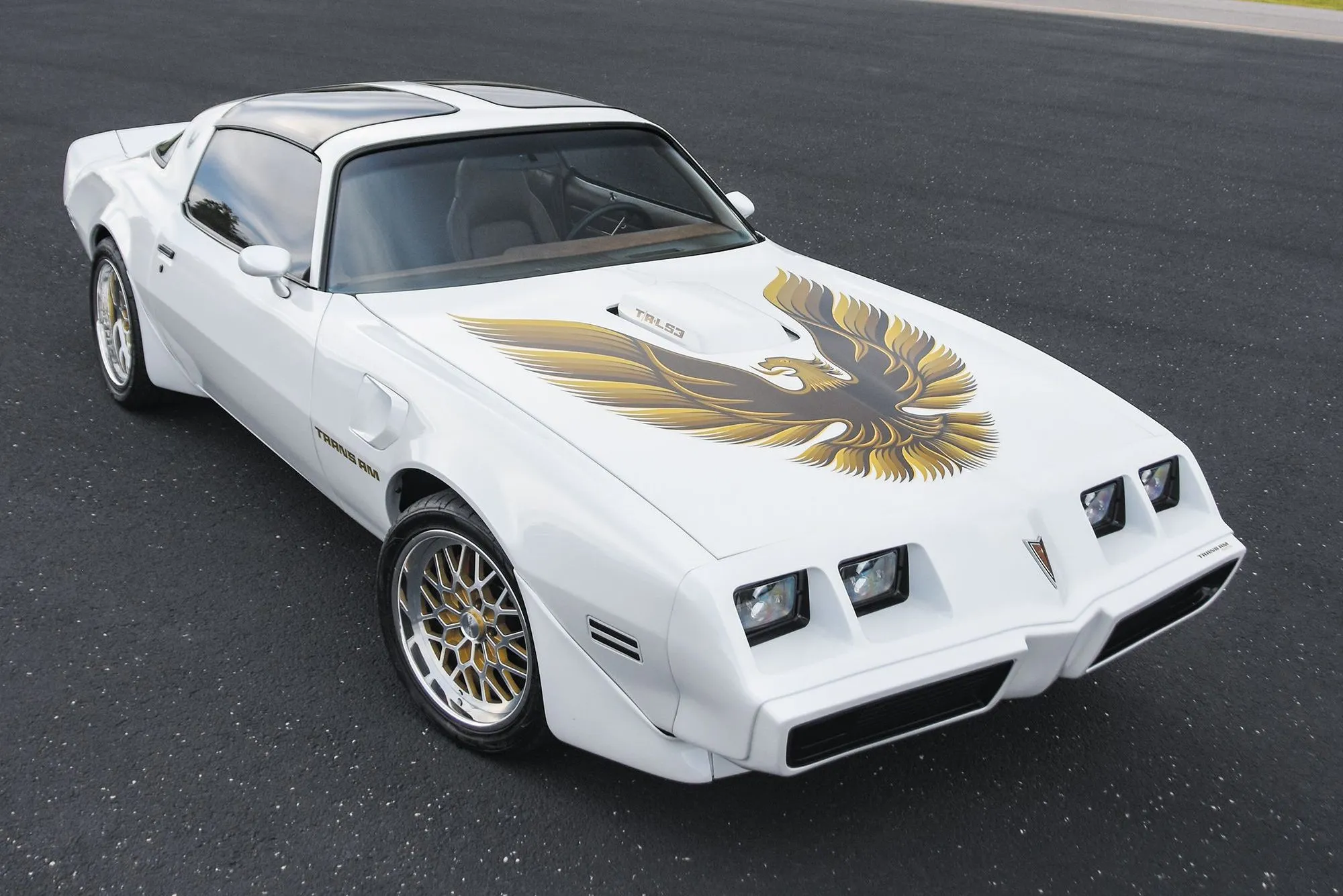
The WS6 option added larger front and rear stabilizer bars, 15x8-inch Snowflake aluminum wheels with raised-white-letter tires, and suspension calibration specific to the package. Documented WS6 cars earn a premium because the package represents a real improvement in handling capability. It appeals to buyers who actually drive their cars, not just show them.
Factory T-Tops
T-tops add value, but the condition underneath them determines whether that premium is justified. T-tops that have been leaking for years come with hidden water damage in the headliner, carpet, and in bad cases the floor structure. Inspect those areas carefully before paying a T-top premium. Staining and soft spots in the carpet are the first things to look for.
Y84 Special Edition Package
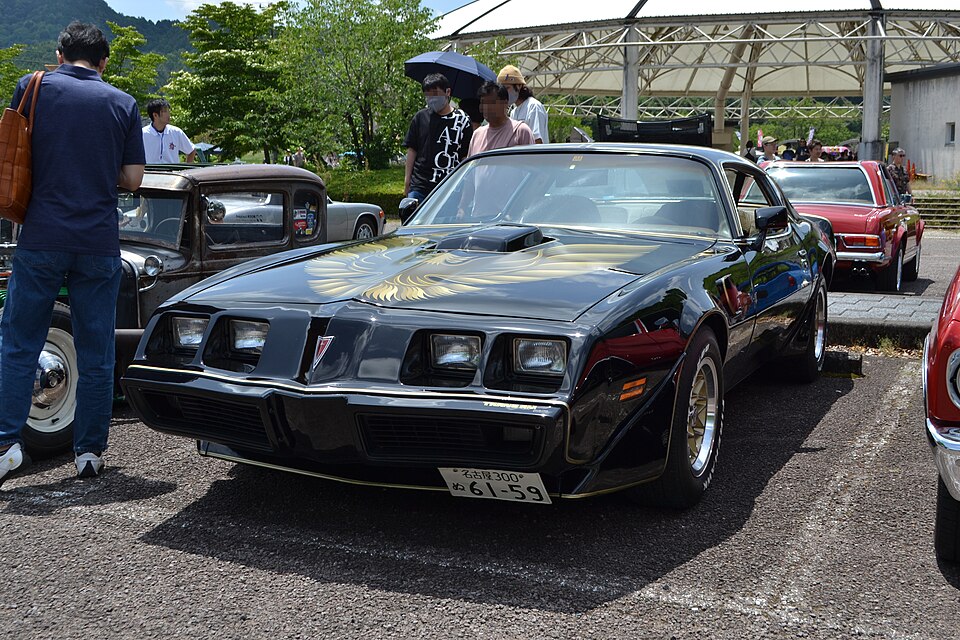
The Y84 Special Edition dressed the 1979 Trans Am in black exterior paint with gold striping and the large Firebird hood decal. The package included a specific interior color combination and gold-painted Snowflake aluminum wheels. Because of the cultural profile that the black-and-gold Trans Am built across the late 1970s, Y84 cars carry a consistent premium across all condition tiers, typically 20 to 35 percent above a comparable standard Trans Am. Well-documented Y84 cars in excellent condition regularly exceed $55,000 at auction.
Matching Numbers and Documentation
An unrestored car with its original engine, window sticker, and broadcast sheet is worth meaningfully more than the same car without that paper trail. PHS Automotive Services can issue a documentation certificate using the VIN that confirms a car's factory-installed options from original Pontiac records. That certificate, available through PHS Automotive Services, costs a modest fee and adds real credibility to any transaction, whether you are buying or selling.
Color
Black is the most requested exterior color on 1979 Trans Ams. Other factory colors sell, but black cars generate more competing offers and tend to close faster at or above the asking price.
How Condition Grading Works and Why the Spread Is So Large
The classic car market uses a 1-to-4 condition scale. Condition 1 is concours quality. Condition 4 is a driver that needs real attention. The dollar gap between those grades on a 1979 Trans Am can exceed $45,000, which makes honest grading critical for anyone on either side of a transaction.
The persistent problem is that sellers consistently describe their cars as being in better condition than they actually are. A car with a repaint in a color close to original, a replaced carburetor, and a set of correct-looking aftermarket wheels is not a Condition 2 car regardless of how the listing reads. It may not even be a solid Condition 3.
Before buying, have the car inspected by someone who knows second-generation Firebirds specifically. Rust shows up predictably in the floor pan corners, the battery tray area, the rocker panels, and around the rear window. Finding serious rust in any of those locations changes the value conversation immediately and should be reflected in the price. A pre-purchase inspection from a qualified shop costs a few hundred dollars and has saved buyers from far more expensive mistakes.
If you are selling, honest grading reaches more serious buyers and produces fewer deals that collapse after an in-person inspection reveals something the listing did not mention.
Why Insurance Valuation Matters for a 1979 Trans Am
Standard auto insurance was not designed for a car that has appreciated over four decades. A standard policy pays actual cash value in the event of a total loss, and the insurer's idea of actual cash value for a 1979 Trans Am rarely reflects what the car would cost to replace in the current market. The gap between what a standard insurer pays and what you actually have invested in a clean example can run to tens of thousands of dollars.
Agreed value coverage eliminates that problem. You and the insurer establish the covered amount at the time the policy is written. If the car is totaled or stolen, you receive that agreed amount. No depreciation applied after the fact, no adjuster assigning a value based on the worst comparable they could find.
Two insurers have built their products around exactly this type of coverage for collector vehicles, and both are consistently recommended within the hobby.
Getting covered is straightforward. You submit photos of the car and, for higher-value examples, a professional appraisal establishing the current market value. The insurer reviews that documentation and writes the agreed value into the policy. Most classic car policies include usage restrictions that prevent the car from being used as a daily driver or cap annual mileage. For most Trans Am owners, those restrictions are easy to work within.